Ultimate Wedding Planning Checklist 2026: Month-by-Month Timeline & Expert Guide
Planning a wedding, sounds exciting, until you realise how many moving parts are involved. From venues and vendors to guest logistics and timelines, even a small oversight can impact the entire experience.
Couples today aren’t just planning a wedding; they’re managing a multi-day event with real budgets, real logistics, and real expectations. Without a clear structure, things can quickly become overwhelming.
A well-defined wedding planning checklist acts as a structured timeline that guides you from engagement to the wedding day. The most effective approach is a month-by-month plan that covers venue booking, vendor selection, budgeting, guest management, and final execution. Starting 10–12 months in advance not only ensures better availability but also allows smoother coordination and stronger cost control, especially for destination weddings and large-scale celebrations.
This guide is designed as a practical, execution-focused framework built from real planning experience, helping you navigate every stage with clarity, confidence, and minimal last-minute stress.
Why You Need a Wedding Planning Checklist
Planning a wedding involves multiple moving parts, venue, vendors, guest experience, logistics, and timelines. Without a structured checklist, it’s easy to miss critical steps that impact cost and execution.
In our experience, couples often focus on décor and aesthetics early, while underestimating logistics like guest movement, vendor coordination, and timelines. This leads to last-minute stress.
A well-defined wedding planning checklist helps you:
- Stay organised across months
- Manage budget and priorities
- Avoid missed deadlines
- Ensure smooth event flow
Wedding Planning Timeline (Month-by-Month Breakdown)
12 Months Before Wedding (Foundation Stage)
This is where your wedding planning officially begins, and the decisions made here will shape everything that follows. A strong foundation reduces confusion later and gives you maximum flexibility in choices.
Fixing your wedding budget
Start by defining a realistic overall budget and allocating it across major categories like venue, F&B, décor, and logistics. This helps you avoid overspending early and ensures priorities are clear from the start.
Creating a guest list estimate
Prepare an approximate guest count, even if it’s not final. This number directly impacts venue selection, accommodation planning, and overall cost structure.
Shortlisting cities (Jaipur, Udaipur, Goa, etc.)
Evaluate cities based on accessibility, weather, venue options, and guest convenience, not just aesthetics. Each destination has different logistical implications.
Booking your venue
Your venue defines capacity, cost, and execution possibilities. It also determines vendor availability and overall planning direction.
Planning Insight:
One mistake we see often is delaying venue booking. Premium venues get blocked 10–14 months in advance, especially during peak wedding season, limiting your options significantly.
10–11 Months Before Wedding (Vendor Locking Stage)
Once your venue is finalised, vendor selection should begin immediately. This stage ensures you secure the right teams before availability becomes limited.
Book wedding planner
A planner helps structure timelines, manage vendors, and streamline execution. Bringing them in early ensures better coordination from the start.
Finalise photographer and videographer
Top photographers are booked months in advance. Choose professionals based on both style and execution capability, not just social media presence.
Hire décor team
Your décor team translates your vision into reality. Early booking allows time for concept development, approvals, and smoother execution.
Start accommodation planning
Identify where your guests will stay and how rooms will be distributed. This becomes critical for destination weddings and large guest lists.
Planning Insight:
Across weddings we’ve handled, vendor availability becomes limited quickly after venue booking, especially for top-tier professionals. Delaying this step often leads to compromises in quality.
8–9 Months Before Wedding (Design & Planning Stage)
This is the stage where your wedding starts taking visual and experiential shape. Decisions here impact both aesthetics and execution feasibility.
Finalising wedding theme and design
Define a cohesive theme that aligns with your venue, guest profile, and budget. Avoid overcomplicating concepts that are difficult to execute on-ground.
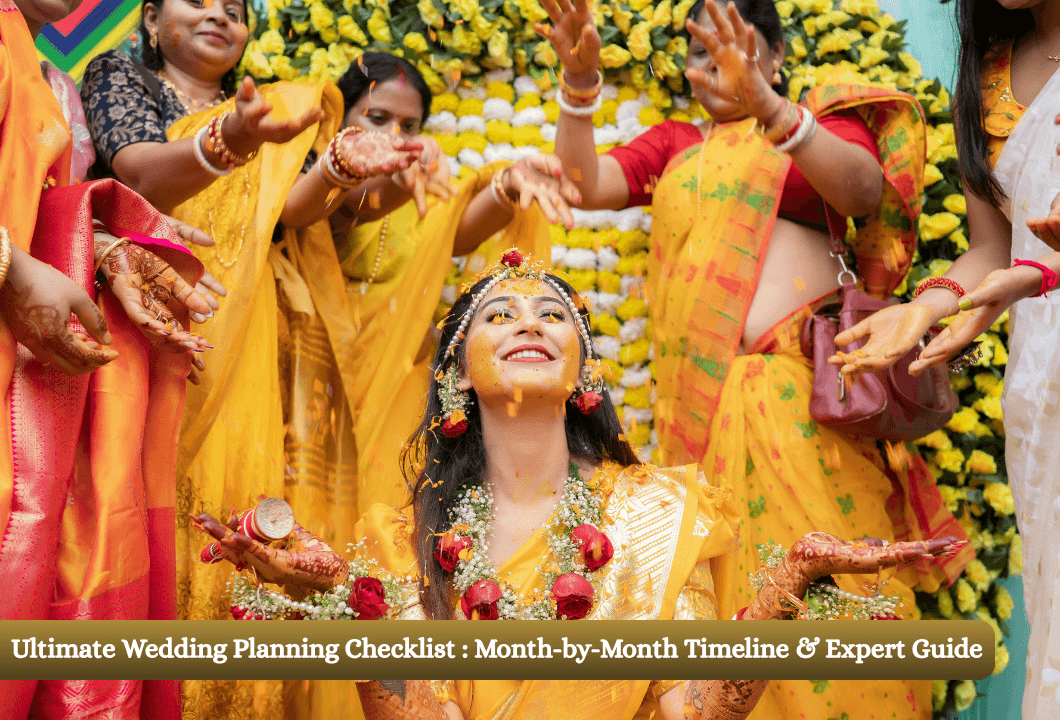
Planning event flow (mehendi, haldi, sangeet)
Structure each function with clear purpose, timing, and transitions. A well-planned flow reduces guest fatigue and improves overall experience.
Shortlisting outfits
Begin selecting wedding outfits early to allow time for trials, fittings, and customisation. Delays here often lead to unnecessary stress closer to the wedding.
Creating mood boards
Mood boards help align all stakeholders, planner, decorator, and vendors, on the visual direction. This avoids miscommunication during execution.
Planning Insight:
At this stage, decisions should balance creativity with execution feasibility. Designs that look good on paper may not always translate well on-ground without proper planning.
6–7 Months Before Wedding (Guest & Logistics Planning)
At this stage, the focus shifts from planning to guest experience. Logistics now become as important as aesthetics.
Send save-the-dates
Inform guests well in advance so they can plan travel and schedules. This is especially critical for destination weddings.
Plan travel logistics
Map out how guests will reach the venue, including flights, transfers, and local transport. Poor planning here leads to confusion and delays.
Block hotel rooms
Reserve sufficient accommodation based on your guest list. Ensure proximity to the venue and comfort for different guest groups.
Create guest database
Maintain a structured list with guest details, travel plans, and room allocations. This becomes the backbone of guest management.
Planning Insight:
Guest movement and accommodation planning directly impact wedding experience. Even a well-designed wedding can feel chaotic if logistics are not handled efficiently.
4–5 Months Before Wedding (Execution Planning Stage)
This phase is about converting plans into actionable execution details. Every decision now needs clarity and coordination.
Finalise vendors
Confirm all key vendors and lock contracts. Last-minute vendor changes often lead to compromises in quality and coordination issues.
Plan menu tastings
Work with your caterer to finalise menus for each function. Consider guest preferences, dietary needs, and event timing while making decisions.
Lock event timelines
Create a structured timeline for each event, including setup, transitions, and execution. This ensures smooth flow across functions.
Start invitation design
Begin designing wedding invitations and communication material. Factor in printing timelines and distribution schedules.
Planning Insight:
In our experience, couples underestimate how long approvals, revisions, and coordination take at this stage. Starting early avoids last-minute pressure.
2–3 Months Before Wedding (Finalisation Stage)
This is where everything moves from planning to confirmation. Accuracy and clarity become critical.
Send invitations
Distribute invitations and track RSVPs. Ensure clear communication regarding dates, venues, and logistics.
Confirm guest list
Finalise your guest list based on responses. This directly impacts seating, catering, and accommodation planning.
Finalise décor layouts
Lock all décor designs, layouts, and setups. Ensure approvals are taken from venue authorities if required.
Confirm logistics
Reconfirm transport, accommodation, and vendor schedules. Every detail should now be documented and aligned.
Planning Insight:
One mistake we see often is last-minute guest additions. This disrupts planning, increases costs, and creates logistical challenges.
1 Month Before Wedding (Coordination Stage)
This is the most critical phase where everything comes together. Execution now depends on coordination, not planning.
Final vendor meetings
Conduct detailed meetings with all vendors to align expectations, timelines, and responsibilities.
Create detailed schedules
Prepare minute-to-minute schedules for each event. This ensures clarity for all teams involved.
Assign responsibilities
Delegate roles to family members, planners, and coordinators. Clear responsibility avoids confusion during execution.
Confirm all bookings
Double-check all bookings, venue, vendors, accommodation, and transport. Any gaps at this stage can disrupt the entire event.
Planning Insight:
At this stage, execution planning matters more than creativity. A well-coordinated wedding feels effortless, while poor coordination can impact even the best-designed events.
Wedding Week Checklist
The wedding week is where planning transitions into execution. Every detail must now be verified and aligned to avoid last-minute disruptions.
Vendor confirmations
Reconnect with all vendors to reconfirm timelines, deliverables, and contact points. Even minor miscommunication at this stage can lead to delays during events.
Guest arrivals coordination
Track guest arrivals, airport pickups, and hotel check-ins in real time. Assign a dedicated team or coordinator to manage this smoothly, especially for destination weddings.
Emergency backup plans
Prepare contingency plans for weather changes, technical failures, or vendor delays. Backup indoor venues, alternate suppliers, and buffer time should already be mapped.
Final rehearsals
Conduct walkthroughs for key events like baraat flow, stage positioning, and entry sequences. This ensures everyone involved understands the execution flow.
Planning Insight:
Smooth coordination during this week determines the overall experience. Most wedding-day stress comes from poor week-of coordination, not planning gaps.
Wedding Day Checklist
The wedding day is about execution, not decision-making. Everything should already be planned and documented.
Follow timeline strictly
Stick to the planned schedule to avoid cascading delays across functions. Even small timing shifts can impact vendor coordination and guest experience.
Keep buffer time
Build flexibility into the schedule to accommodate delays in makeup, travel, or rituals. Without buffers, timelines quickly collapse under pressure.
Ensure vendor coordination
All vendors must be aligned on timing, setup, and responsibilities. A central coordinator or planner should oversee communication between teams.
Prioritise guest experience
Ensure guests are comfortable, informed, and attended to. From seating to refreshments, small details shape the overall perception of the wedding.
Planning Insight:
A well-planned wedding day feels effortless because every decision has already been made in advance.
Budget Planning Checklist
Budget planning is one of the most critical yet underestimated aspects of wedding planning. A well-structured budget prevents overspending and ensures priorities are clear.
Venue and accommodation
This is typically the largest cost component. It includes venue rental, room bookings, and buyout costs if applicable. Venue choice directly influences overall budget.
Food & beverage
F&B costs scale with guest count and number of events. Menu complexity, service style, and premium add-ons significantly impact final costs.
Décor and production
Décor budgets vary based on design complexity, installations, and technical production elements like lighting and staging.
Photography and entertainment
High-quality photographers and entertainment teams come at a premium but significantly enhance the overall experience.
Logistics and transport
Guest transfers, vendor movement, and local transportation often get overlooked but add up quickly.
Planning Insight:
In our experience, couples often underestimate F&B costs compared to décor, leading to budget imbalances.
Pro Tip:
Always allocate a 10–15% contingency buffer to manage unexpected expenses without stress.
Wedding Vendor Checklist
Your vendors are the backbone of your wedding execution. The right team ensures your vision translates smoothly into reality.
Wedding planner
A planner coordinates timelines, vendors, logistics, and execution. They act as the central point of control for the entire wedding.
Decorator
The decorator transforms your visual concept into an on-ground setup. Their ability to execute within venue restrictions is critical.
Photographer & videographer
These professionals capture your wedding memories. Their experience with lighting, timelines, and candid moments directly impacts output quality.
Caterer
Food quality and service define guest satisfaction. Menu planning and execution must align with event flow and guest preferences.
Entertainment
From DJs to live performers, entertainment sets the mood for each event and keeps guests engaged.
Planning Insight:
One mistake we frequently see is booking vendors based only on portfolio. Execution capability, coordination skills, and reliability matter far more during live events.
Common Wedding Planning Mistakes to Avoid
Even well-planned weddings can face challenges if common mistakes are overlooked. Awareness helps prevent unnecessary stress.
Delaying venue booking
Late venue booking reduces options and forces compromises on dates, locations, and budgets.
Ignoring logistics planning
Focusing only on décor and aesthetics while neglecting transport, accommodation, and timelines leads to operational chaos.
Overloading event schedule
Too many events or tightly packed timelines can exhaust guests and reduce enjoyment.
Underestimating guest experience
Guest comfort, accessibility, and hospitality often matter more than visual elements.
Not having backup plans
Weather issues, delays, or vendor problems require contingency planning to avoid disruption.
Planning Insight:
Across events we’ve handled, poor planning, not budget, is the biggest reason for stressful weddings. Structured execution always outperforms last-minute improvisation.
Why the Right Planner Changes Everything
A wedding planning checklist becomes truly effective only when supported by strong execution expertise. This is where the right planner plays a critical role.
Aligns timeline with logistics
A planner ensures your timeline is realistic and aligned with vendor availability, travel schedules, and venue constraints.
Handles vendor coordination
Managing multiple vendors requires constant communication and supervision. A planner centralises this process and avoids misalignment.
Manages permissions and approvals
From venue guidelines to local regulations, planners ensure all approvals are handled correctly and on time.
Ensures seamless execution
On-ground coordination during events is what defines the final experience. A planner ensures everything runs as planned.
Planning Insight:
In our experience, the right planner doesn’t just organise a wedding, they reduce complexity, prevent costly mistakes, and significantly improve the overall experience.
Frequently Asked Questions
1. What is the best wedding planning timeline?
The ideal wedding planning timeline starts 10–12 months before the wedding. It allows enough time for venue booking, vendor selection, and guest planning. Shorter timelines are possible but require faster decisions and flexibility.
2. How to plan a wedding step by step?
Start with budget and guest list, then book your venue. Follow with vendor hiring, design planning, guest logistics, and final execution. A structured month-by-month checklist ensures nothing is missed.
3. What should be included in a wedding checklist?
A wedding checklist should include venue booking, vendor hiring, guest management, budgeting, logistics, event planning, and final execution tasks. It should cover every stage from engagement to wedding day.
4. How early should I start wedding planning?
Ideally 10–12 months before your wedding. This ensures better vendor availability, cost control, and smoother execution.
5. What is the most important part of wedding planning?
Venue selection and guest experience are the most critical. They impact logistics, cost, and overall execution.
6. How do I manage wedding budget effectively?
Break your budget into categories, prioritise key elements, and keep a contingency buffer. Avoid last-minute changes.
7. Do I need a wedding planner?
Not mandatory, but highly recommended for destination or large weddings. A planner simplifies execution and reduces stress.
8. What is a wedding vendor checklist?
It’s a list of all required vendors including planner, decorator, photographer, caterer, and entertainment teams.
9. How to avoid wedding planning stress?
Follow a structured checklist, start early, delegate tasks, and avoid last-minute decisions.
10. What happens if I delay wedding planning?
Delays lead to limited vendor availability, higher costs, and compromised execution.
Final Word
A wedding planning checklist is not just a timeline, it’s your execution blueprint. When followed correctly, it simplifies decisions, aligns vendors, and ensures a smooth experience.
In our experience, the most successful weddings are not the most extravagant, they are the most well-planned. Start early, stay structured, and focus on execution as much as aesthetics.
The difference between chaos and a seamless celebration lies in planning discipline.